PVC Cable Trunking Mold Specification Guide 2026
PVC Cable Trunking Mold Specification: A Complete Technical Reference for Buyers in 2026

Manager, Huangshi Zhongjie Mould Co., Ltd. · Published June 28, 2026
📑 Table of Contents
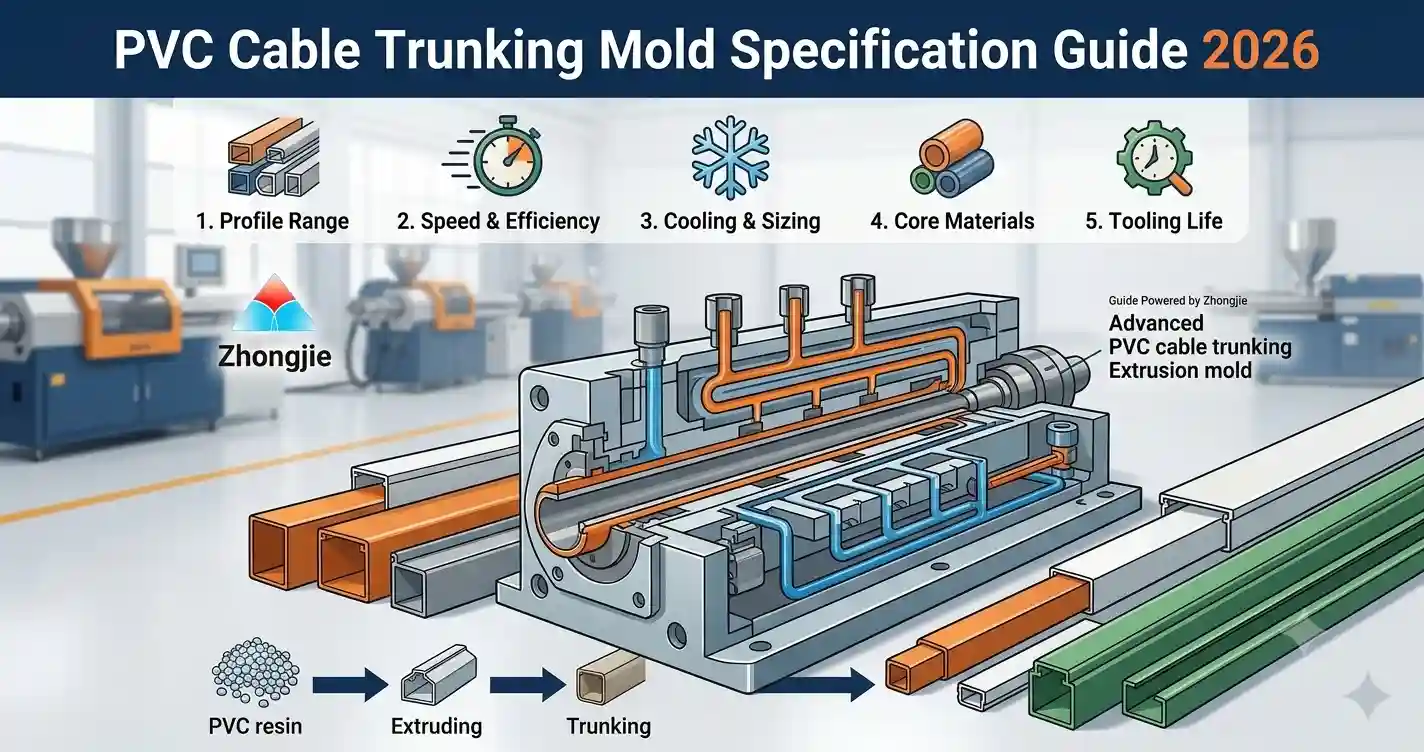
Getting the PVC cable trunking mold specification right from the outset determines whether your trunking production line delivers consistent dimensional accuracy, clean snap-fit lid engagement, and the flame-retardant surface finish that electrical installation markets demand. An underspecified mold — one that cuts corners on steel grade, die land tolerance, or calibrator design — produces trunking that fails snap-fit tests, drifts dimensionally across production batches, or shows surface drag marks that trigger buyer rejection. This guide defines every critical parameter in a PVC cable trunking mold specification, giving procurement engineers and production managers a complete reference before requesting tooling quotations.
1. What Is a PVC Cable Trunking Mold?
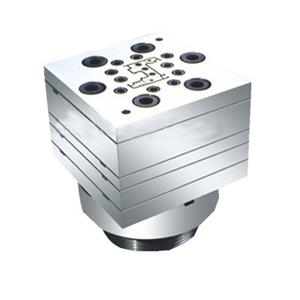
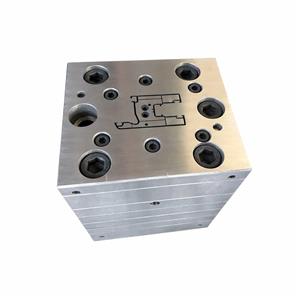
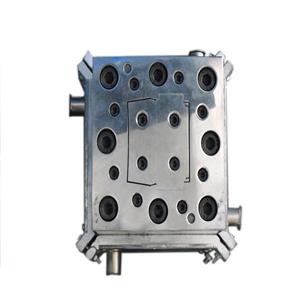
A PVC cable trunking mold — also called a cable duct extrusion die or wire duct profile die — is a precision steel tool through which a rigid PVC compound is continuously extruded to produce a U-shaped or rectangular channel profile used in electrical installations to route and protect wiring. The mold defines the cross-sectional geometry of both the trunking base and, in a separate die set, the snap-fit lid that closes the channel.
PVC cable trunking extrusion is a high-volume, price-competitive production process. Base and lid profiles are extruded separately on two production lines, then paired and packaged in 2-meter lengths. The mold must therefore produce profiles with dimensional consistency tight enough that any lid pairs correctly with any base — regardless of which production shift or which extruder batch produced them. This interchangeability requirement makes dimensional tolerance control the most demanding aspect of PVC cable trunking mold specification.
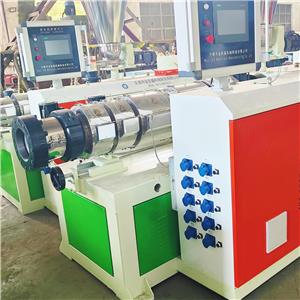
A complete mold system for PVC cable trunking production includes the extrusion die (shaping the profile cross-section), the die head (adapting extruder output to die inlet geometry), and the calibrator (vacuum-cooling the profile to final dimensions). All three components must be specified together — not sourced independently — to ensure dimensional compatibility across the complete tool set.
2. Standard PVC Cable Trunking Profile Dimensions and Tolerances
PVC cable trunking is produced in a range of standard cross-sections defined by international and regional standards. The most widely traded sizes in European and Asian electrical installation markets follow the IEC 61084 series, which specifies nominal widths, heights, and wall thickness ranges for cable management systems.
The table below shows common PVC cable trunking profile sizes, their nominal wall thickness, and the dimensional tolerance class typically required by buyers in regulated markets:
| Trunking Size (W × H mm) | Nominal Wall Thickness | Width Tolerance | Height Tolerance |
|---|---|---|---|
| 16 × 16 | 1.0–1.2 mm | ±0.3 mm | ±0.3 mm |
| 25 × 16 | 1.0–1.3 mm | ±0.3 mm | ±0.3 mm |
| 40 × 25 | 1.2–1.5 mm | ±0.4 mm | ±0.4 mm |
| 60 × 40 | 1.5–1.8 mm | ±0.5 mm | ±0.5 mm |
| 100 × 60 | 1.8–2.2 mm | ±0.6 mm | ±0.6 mm |
| 150 × 75 | 2.0–2.5 mm | ±0.8 mm | ±0.8 mm |
Snap-fit lid engagement adds a critical secondary tolerance requirement not visible in the cross-section dimensions alone. The lid retaining lip geometry — the small hooked return that clicks into the trunking base — must be reproduced to within ±0.15 mm to guarantee reliable snap engagement across the full temperature range from 0 °C to 60 °C. A die that holds outer profile dimensions but fails to reproduce the snap-fit geometry accurately causes field installation complaints that damage the brand regardless of the profile's structural integrity.
3. Core Mold Specification Parameters Buyers Must Define
A complete PVC cable trunking mold specification document should define the following parameters before any die supplier is asked to submit a quotation. Incomplete specifications produce incomparable quotes and increase the risk of post-delivery disputes.
3.1 Profile Drawing with Full GD&T Annotation
Provide a CAD drawing with all critical dimensions annotated — outer width, height, wall thickness at every section, snap-fit lip geometry, internal corner radii, and draft angles if applicable. Geometric Dimensioning and Tolerancing (GD&T) annotations for parallelism, squareness, and straightness are particularly important for trunking because these properties determine how lengths join at installation connectors.
3.2 PVC Compound Specification
Specify the PVC compound grade by ASTM D1784 cell classification or equivalent EN/ISO standard. For cable trunking sold in European markets, the compound must meet the flame-retardancy requirements of IEC 61084-1 — specifically the glow wire test at 850 °C per IEC 60695-2-12. The compound's impact modifier type and loading level affect melt viscosity and therefore die land length requirements.
3.3 Die Land Length
Die land length — the parallel section at the die exit — must be specified relative to the profile wall thickness. For rigid PVC trunking, a land-length-to-wall-thickness ratio of 15:1 to 25:1 is standard. Undersized land length produces a profile with residual melt memory, causing the trunking to curve or twist as it cools on the calibration table. Oversized land length increases die resistance and raises extruder motor load unnecessarily.
3.4 Extruder Interface Specification
Define the extruder make, model, barrel diameter, and die-mounting flange dimensions — specifically the bolt circle diameter, number of bolts, and centering bore size. A die built to the wrong flange specification cannot be mounted without adapter plates that introduce alignment error. This parameter is frequently omitted from trunking die specifications and is one of the most common causes of installation delay.
3.5 Calibrator Specification
Define calibrator sleeve length, number of vacuum zones, water inlet temperature target, and whether the calibrator is designed for dry-type or wet-type operation. For trunking profiles up to 60 mm wide, a single-zone dry calibrator of 400–600 mm length is standard. Profiles above 100 mm wide require multi-zone calibrators of 600–900 mm to maintain uniform vacuum contact across the full profile width.
4. Steel Grade and Surface Treatment Specifications
PVC cable trunking dies process a relatively non-abrasive material compared to WPC or filled PVC compounds. However, PVC melt is inherently corrosive to unprotected steel — particularly at the processing temperatures of 170–195 °C common in rigid PVC trunking production. Steel and surface treatment selection must therefore prioritize corrosion resistance alongside dimensional stability.
Three steel and treatment combinations cover the range of trunking die applications:
40Cr with hard-chrome plating — standard specification for most PVC cable trunking dies. The die body uses 40Cr structural steel for rigidity and machinability. Flow channel walls and die lip surfaces are hard-chrome plated to 0.02–0.03 mm depth and polished to Ra ≤ 0.4 µm. This combination provides adequate corrosion resistance for standard PVC trunking compounds at normal production volumes.
38CrMoAl (nitrided) — premium specification for high-speed production lines running above 4 m/min haul-off speed. The nitrided surface layer (HV 900–1,100, depth 0.3–0.5 mm) resists scoring from the faster melt velocity at the die exit and extends die service life by 30–40% compared to chrome-plated 40Cr under equivalent conditions.
Stainless steel 420 at die lips — corrosion-critical specification for trunking compounds containing high concentrations of flame-retardant additives. Certain halogen-free or intumescent additives generate mild acidic conditions at the die exit that accelerate corrosion of carbon steel lip edges. Stainless steel 420 die lips eliminate this failure mode at modest additional cost.
All die lip and flow channel surfaces — regardless of steel grade — should be polished to Ra ≤ 0.2 µm at the exit land. This finish produces the smooth, drag-free trunking surface that professional electrical contractors expect. A visibly rough surface on PVC cable trunking signals tooling wear or inadequate die finishing and is grounds for rejection by quality-conscious buyers in European and North American markets.
5. Die Design Considerations Specific to PVC Cable Trunking
PVC cable trunking profiles share a common geometric family — open U-channel or rectangular box — but each size presents specific engineering challenges that a general-purpose die shop without trunking experience frequently underestimates.
5.1 Wall Thickness Uniformity Across the U-Channel
The three walls of a trunking base (two side walls and one base wall) must be uniform in thickness to within ±0.1 mm. A thicker base wall relative to the side walls creates differential cooling shrinkage that bows the trunking base inward — a defect immediately visible when the profile is laid flat on an installation surface. Achieving uniform wall thickness requires careful flow channel balancing at the die manifold, with channel depth adjusted section by section to equalize melt velocity across the three walls.
5.2 Corner Radius and Squareness Control
Cable trunking corner radii — typically 1.0–2.0 mm internal radius — must be reproduced consistently to ensure that trunking couplers and corner fittings seat flush against the profile. The die land geometry at each corner must account for die swell — the tendency of PVC melt to expand slightly as it exits the die and relaxes. Experienced die designers apply a correction factor of 3–8% to corner geometry to compensate for die swell at typical PVC trunking processing temperatures.
5.3 Snap-Fit Lip Geometry Precision
The snap-fit lid retention system is the most geometrically demanding feature of the trunking profile die. The hooked return lip — typically 1.5–3.0 mm wide and 0.8–1.5 mm in height — must be reproduced at the die exit with dimensional accuracy better than ±0.15 mm to guarantee reliable snap engagement. This precision requires EDM (electrical discharge machining) finishing of the lip geometry rather than conventional CNC milling alone. A die shop without in-house wire EDM capability cannot reliably hold these tolerances on snap-fit features.
5.4 Haul-Off Speed and Line Speed Optimization
PVC cable trunking is a commodity product where production cost per meter is the key financial metric. Die design must support haul-off speeds of 3–6 m/min for standard sizes (up to 60 × 40 mm) without producing dimensional variation or surface drag marks. Achieving this requires a die land that is precisely parallel at the exit — any taper, even 0.01 mm across a 50 mm land length, creates differential drag that manifests as a bowed profile at higher line speeds. The die land parallelism specification should be stated explicitly in the mold specification document: ±0.01 mm across the full land length is the industry standard for production-grade trunking dies.
6. Compliance Standards That Govern PVC Cable Trunking Mold Specification
PVC cable trunking products sold in regulated markets must comply with performance standards that work backward into mold specification requirements. Buyers sourcing trunking dies for specific markets should confirm compliance requirements before finalizing die specifications:
IEC 61084-1 — This is the primary international standard for cable management systems for electrical installations, covering general requirements and tests for conduit systems, cable trunking, and cable ducting. It defines dimensional requirements, impact resistance, flame propagation limits, and the glow wire test protocol that PVC trunking must pass. Die designs targeting IEC 61084-1 compliant trunking must produce profiles with wall thickness uniformity and corner geometry within the standard's dimensional acceptance criteria.
IEC 60695-2-12 — Specifies the glow wire flammability index (GWFI) test at 850 °C for components used in electrical equipment and installations. Compliance requires that the PVC compound — not the die itself — contains the correct flame-retardant additive system. However, the die must process this compound without degrading the additive system through excessive shear heating. The temperature zoning must keep the melt temperature below 200 °C throughout the flow channel.
EN 50085 (European equivalent of IEC 61084) — The European implementation of cable trunking system requirements, adopted by electrical installation contractors across EU member states and many export markets. Buyers supplying European electrical wholesalers or contractors will typically be required to demonstrate EN 50085 compliance through third-party testing.
ASTM D1784 — For PVC cable trunking sold in North American markets, compound classification under ASTM D1784 defines the material cell class — particularly impact resistance and heat deflection temperature — that must be achievable from the compound the trunking die processes.
Sharing the specific compliance standard required for your target market with your die supplier before design commences ensures the die's temperature zone layout, land length, and flow channel geometry are optimized for the compound formulation required to achieve certification. This single step eliminates the most common post-delivery conflict in trunking die procurement: a die that produces correct dimensions but cannot run the compliance-grade compound without surface or processing defects.
7. Frequently Asked Questions
Q: Do I need a separate mold for the trunking base and the snap-fit lid?
A: Yes — in virtually all commercial PVC cable trunking production, the base and lid are extruded on separate lines using separate dies. The base die produces the U-channel body; the lid die produces the flat cover with the snap-fit retention lips. Both dies must be dimensioned to ensure the lid engages the base within the snap-force range specified by IEC 61084-1 across the full size range.
Q: Can one PVC cable trunking die produce multiple trunking sizes by adjusting extruder settings?
A: No. A trunking extrusion die is fixed to a specific cross-section geometry. Different trunking sizes — for example, 40 × 25 mm and 60 × 40 mm — each require a dedicated die and matching calibrator. Line speed and extruder temperature adjustments affect wall thickness within a narrow range but cannot change the profile's outer dimensions or snap-fit geometry.
Q: What is the typical service life of a PVC cable trunking mold under normal production conditions?
A: A well-maintained trunking die made from 38CrMoAl nitrided steel or 40Cr with hard-chrome plating typically runs for 5–8 years under normal production conditions with standard rigid PVC compound. Premature wear — occurring within 1–2 years — is usually caused by compound moisture contamination, excessive processing temperature, or inadequate die cleaning during compound changeovers.
Q: What documentation should a PVC cable trunking mold supplier provide at delivery?
A: A professional supplier delivers four documents with every trunking die: a pre-shipment test report with cross-section measurements and surface photographs, the original die assembly drawing with all critical dimensions, a material certificate for the die steel used, and recommended processing parameters (temperature zones, extruder RPM range, haul-off speed) for the compound the die was tested with.
8. Conclusion & Next Steps
A complete PVC cable trunking mold specification covers seven interdependent parameters: profile drawing with full GD&T tolerances, PVC compound grade and flame-retardancy class, die land length ratio, extruder flange interface dimensions, calibrator sleeve length and vacuum zone count, steel grade and surface treatment, and target compliance standard. Specifying all seven before requesting quotations produces comparable supplier proposals and eliminates the most common sources of post-delivery disputes over dimensional non-conformance and snap-fit performance.
At Huangshi Zhongjie Mould Co., Ltd., we manufacture PVC cable trunking molds across the full range of standard and custom sizes, from 16 × 16 mm miniature trunking to 150 × 75 mm heavy-duty cable management profiles. Our engineering team designs every trunking die set — base die, lid die, and calibrators — as a matched system tested together before shipment. We hold a High-Tech Enterprise Certificate and are an active member of the Extrusion Mould Association of Huangshi City, with verified export customers in Europe, the Middle East, and Southeast Asia spanning more than 16 years of continuous production.
If you are sourcing PVC cable trunking molds for a new production line or replacing worn tooling, contact our PVC cable trunking mold engineering team with your profile drawing, target compliance standard, and extruder model. We return a complete mold specification proposal and quotation within 48 hours.
Request a Free Trunking Mold Quote →
Sources & References
The following sources were referenced in the preparation of this article: