How to Choose a Plastic Extrusion Die | 2026 Guide
How to Choose a Plastic Extrusion Die: A Practical Buyer's Framework for 2026

Manager, Huangshi Zhongjie Mould Co., Ltd. · Published June 28, 2026
📑 Table of Contents
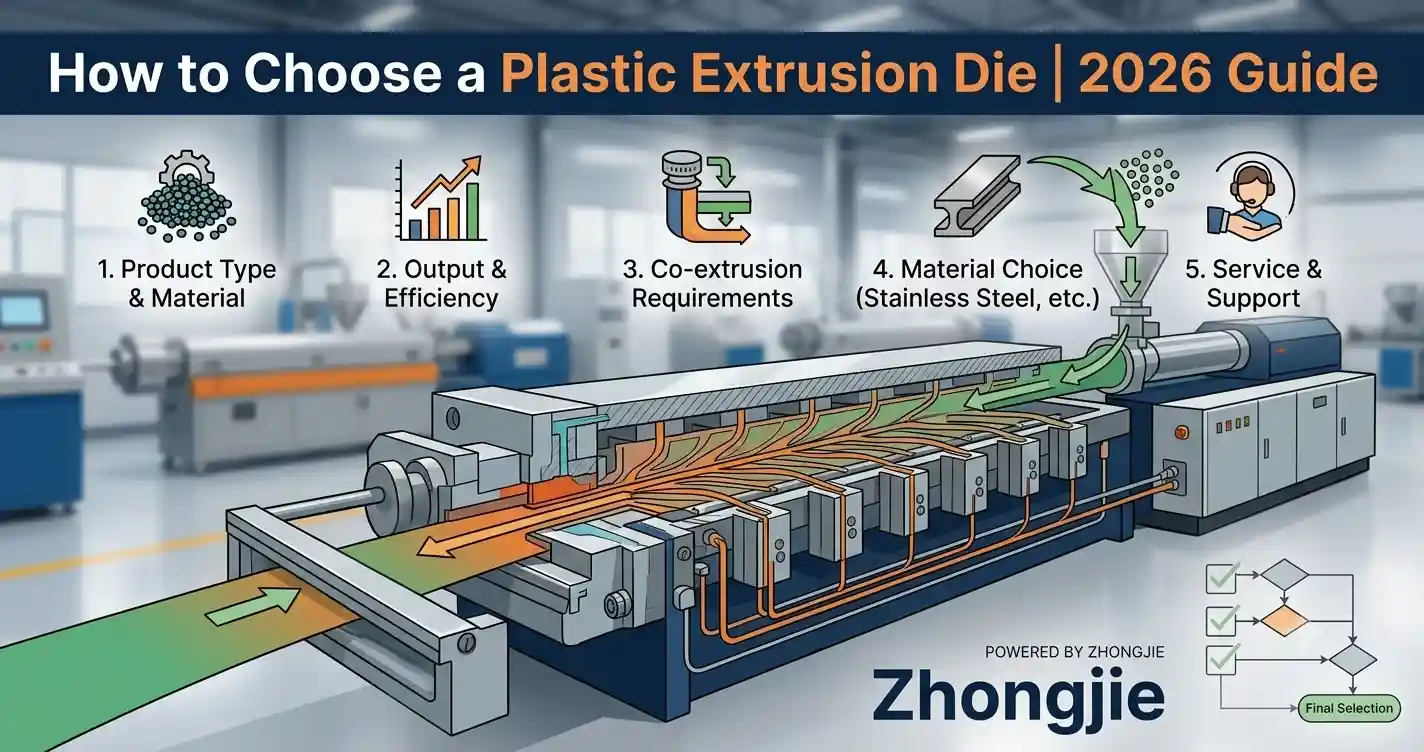
Knowing how to choose a plastic extrusion die is the foundation of any successful profile production investment. The die defines every critical attribute of your finished product — cross-section accuracy, surface finish, wall thickness consistency, and maximum line speed. A die chosen without a structured evaluation framework leads to costly rework, extended startup times, and production scrap that no downstream adjustment eliminates. This guide gives engineers and procurement managers a five-step process for choosing a plastic extrusion die that is correctly matched to material, profile geometry, production requirements, and long-term budget.
1. What Is a Plastic Extrusion Die and What Does It Do?
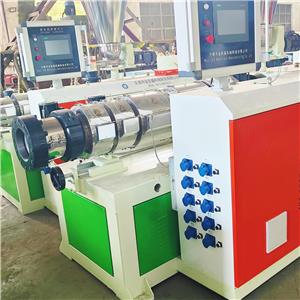
A plastic extrusion die — also called an extrusion mold or profile die — is a precision steel tool mounted at the exit of an extruder barrel through which molten thermoplastic is forced under pressure to produce a continuous profile with a fixed cross-sectional shape. The die does not simply punch out a shape; it controls how melt flows, distributes pressure across the profile width, and delivers material to the exit at the correct velocity and temperature to produce a dimensionally stable profile.
A complete die system for plastic profile extrusion includes three matched components:
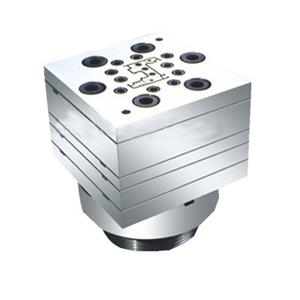
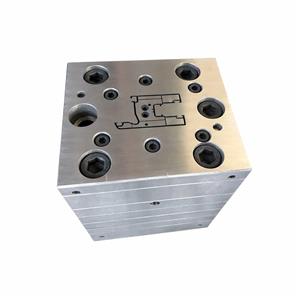
Die head — Receives melt from the extruder flange and redistributes it from a circular barrel bore into the flat or complex geometry of the profile cross-section.
Die land — The parallel section immediately before the exit that stabilizes flow velocity across the full profile geometry before the melt leaves the die.
Calibrator — A downstream vacuum-cooled sizing tool that locks in the profile's final dimensions as it exits the die in a still-soft state.
All three components must be engineered as a matched set for the specific material and profile being produced. Choosing a die without simultaneously specifying the calibrator is one of the most common — and most expensive — procurement errors in plastic extrusion tooling.
2. Step 1 — Match the Die to Your Material
Material type is the first and most decisive variable in plastic extrusion die selection. Different thermoplastics behave differently in the molten state, and a die designed for one material will perform poorly — or fail prematurely — when used with another. The four material families most commonly processed through profile extrusion dies each impose distinct design requirements:
| Material | Processing Temperature | Key Die Design Consideration | Typical Applications |
|---|---|---|---|
| UPVC / PVC | 160–200 °C | Corrosion-resistant chrome-plated channels; narrow processing window | Window profiles, pipe, cable trunking, foam board |
| WPC (PE or PVC base) | 155–190 °C | Abrasion-resistant nitrided steel; streamlined channels to prevent fiber accumulation | Decking, fencing, cladding, wall panels |
| PP / PE | 200–250 °C | Higher thermal mass in die body; longer land length for melt stabilization | Pipe, hollow profiles, industrial tubing |
| ABS / PMMA / PC | 210–270 °C | High-polish flow channels; precise temperature uniformity to prevent degradation streaks | Display profiles, glazing strips, optical components |
Beyond base polymer type, compound additives change die requirements significantly. Calcium carbonate-filled PVC is more abrasive than unfilled grades. Foaming agents in PVC foam compounds generate corrosive decomposition gases that attack unprotected steel. WPC formulations with glass fiber reinforcement require harder die steels than wood-flour-only compounds. Share your full compound formulation — not just the base polymer — with any die supplier you are evaluating.
3. Step 2 — Define Your Profile Geometry Requirements
Profile geometry drives die complexity, which directly determines tooling cost and lead time. Before requesting a quotation from any plastic extrusion die supplier, define four geometric parameters precisely:
3.1 Cross-Section Complexity
Simple solid profiles — flat bars, round rods, angle sections — use straightforward single-manifold dies. Multi-chamber hollow profiles for window frames or decking boards require internal mandrels, spider legs, and weld-line management. The number of hollow chambers, the minimum wall thickness, and the presence of asymmetric cross-sections all increase die engineering time and steel volume.
3.2 Dimensional Tolerance Class
Tight-tolerance profiles for building products sold in regulated European markets must meet EN 12608 Class A dimensional requirements for UPVC window profiles, or equivalent national standards. These requirements translate directly into die land precision tolerances of ±0.02 mm or better and calibrator sleeve finishes of Ra ≤ 0.4 µm. Specify your required tolerance class before requesting a quotation — it determines whether standard tooling steel or premium-grade material is required.
3.3 Profile Width and Wall Thickness Ratio
Wide profiles — above 150 mm — require larger coat-hanger manifolds to distribute melt evenly across the full width. Thin-wall profiles below 1.5 mm wall thickness are particularly sensitive to flow imbalance and require tighter die gap control than thick-wall equivalents. Both parameters affect die price and manufacturing time.
3.4 Single vs. Co-Extrusion Requirement
If your profile requires a cap layer — for UV protection, color, or surface hardness — the die must be designed as a co-extrusion tool from the outset. Adding a co-extrusion channel to an existing single-layer die is almost always more expensive than commissioning a purpose-built co-extrusion die. Confirm this requirement before the die design stage, not after.
4. Step 3 — Specify the Right Steel Grade and Surface Treatment
Die steel selection is not a commodity decision. The wrong steel grade for a given material and production volume leads to premature wear, dimensional drift, and surface defects that shorten the die's productive life. Three steel categories cover the majority of plastic profile extrusion applications:
38CrMoAl (nitrided) — The standard choice for PVC and WPC dies. Gas nitriding produces a surface hardness of HV 900–1,100, which provides good abrasion resistance against filled PVC and moderate-fill WPC compounds. Nitriding depth of 0.3–0.5 mm is typical. This steel is cost-effective for dies running standard production volumes.
H13 / 4Cr5MoSiV1 with hard-chrome plating — Preferred for high-fill WPC (above 60% wood flour), highly abrasive PVC foam compounds, and any die requiring corrosion resistance against acidic melt decomposition products. Chrome plating to 0.02–0.04 mm depth followed by polishing to Ra ≤ 0.2 µm extends die service life by 30–50% over nitrided 38CrMoAl alone.
Stainless steel (420 or equivalent) — Used selectively for die lips and flow channel surfaces in highly corrosive applications — particularly PVC foam dies where residual HCl from compound degradation attacks carbon steel grades. Higher material cost is offset by reduced maintenance frequency.
Surface polish quality at the die exit lips and flow channel walls is as important as steel grade. A mirror-finish exit lip (Ra ≤ 0.1 µm) produces smoother profile surfaces, reduces melt adhesion, and lowers the risk of die lip scoring during startup. Request surface finish specifications in writing from any supplier — not just a verbal assurance of "high-quality finish."
5. Step 4 — Evaluate Calibrator Compatibility
The calibrator is the downstream component that completes the plastic extrusion die system. Its function is to receive the still-soft profile as it exits the die and size it to final dimensions under vacuum and chilled water cooling. A calibrator not designed to match the specific die exit geometry creates dimensional problems that cannot be resolved by adjusting extruder or haul-off parameters.
Four compatibility factors must be confirmed before accepting a die and calibrator from any supplier:
Exit geometry match — The calibrator inlet cross-section must match the die exit cross-section within ±0.05 mm. Any mismatch causes the soft profile to deform as it transitions between the two components.
Vacuum zone coverage — Wide profiles require multiple independent vacuum zones across the calibrator width. Single-zone calibrators for profiles above 100 mm wide produce uneven surface contact and dimensional variation from edge to center.
Cooling capacity — Calibrator water flow rate and sleeve length must be sufficient to reduce the profile core temperature to below the material's heat distortion temperature before the haul-off. Undersized calibrators force slower line speeds and reduce output below extruder capacity.
Single-source supply — Sourcing die and calibrator from the same manufacturer eliminates the most common source of post-installation disputes: each supplier blaming the other for dimensional non-conformance. A matched set from one engineering team carries a single point of accountability.
6. Step 5 — Assess the Supplier Against Six Proven Criteria
A technically correct die specification still fails if the supplier cannot manufacture to the required standard or support the tooling after delivery. Apply these six criteria when shortlisting any plastic extrusion die supplier:
Material-specific experience — A supplier who has built hundreds of dies for your target material — PVC, WPC, PE, or engineering polymers — has encountered and resolved the specific processing challenges your application will present. Ask for examples of comparable dies from their production history.
In-house CNC and EDM capability — Die flow channels and land surfaces require CNC milling, wire EDM, and surface grinding to specified tolerances. Suppliers who outsource these operations have less control over dimensional accuracy and delivery timelines.
Pre-shipment trial run protocol — Every plastic extrusion die should be tested on a comparable extruder before shipment. The supplier should provide a written test report with profile cross-section measurements, surface photographs, and processing parameters used during the trial.
Documented certifications — Third-party quality credentials — such as a High-Tech Enterprise Certificate or membership in a regional extrusion mold industry association — provide independent verification of manufacturing capability and quality system maturity.
Export track record — A supplier who has exported dies to Europe, North America, or the Middle East has demonstrated the ability to meet international dimensional tolerance expectations and navigate export documentation requirements reliably.
Post-delivery warranty and support — A one-year warranty with on-site engineer dispatch capability is the minimum acceptable commitment. Confirm in writing whether the buyer or supplier bears engineer travel and accommodation costs if on-site intervention is needed.
7. Frequently Asked Questions
Q: How much does a custom plastic extrusion die cost?
A: Price varies widely by profile complexity, material type, steel grade, and die width. A simple single-cavity PVC profile die typically ranges from US$2,000 to US$8,000. Multi-chamber hollow profile dies, co-extrusion dies, or wide-format foam board dies can range from US$8,000 to US$30,000 or more. Request a quotation with your profile drawing for an accurate figure.
Q: Can the same plastic extrusion die be used on different extruder brands?
A: The die body itself is profile-specific and transferable between extruders. However, the die flange connection must match the extruder outlet flange dimensions — typically specified by the extruder manufacturer. When ordering a die, provide the extruder make, model, and flange bolt circle dimensions to ensure direct mounting compatibility.
Q: What is the typical lead time for a custom plastic extrusion die from a Chinese manufacturer?
A: Standard profile dies are typically completed in 35–45 days after deposit and drawing approval. Complex co-extrusion dies, wide-format flat dies, or dies requiring premium steel procurement may require 45–60 days. Confirm the lead time in writing and include a penalty clause for late delivery in the purchase agreement for time-sensitive projects.
Q: How do I know if a die flow channel is balanced before the die is built?
A: Leading die manufacturers use rheological flow simulation software to model melt distribution across the profile before cutting steel. Ask whether your shortlisted supplier uses simulation — and ask to see a sample simulation output for a comparable profile. Suppliers who rely solely on empirical experience for flow balancing carry higher first-trial failure risk than those who combine simulation with hands-on adjustment.
8. Conclusion & Next Steps
Knowing how to choose a plastic extrusion die comes down to five disciplined steps: match the die architecture and steel grade to your specific material, define profile geometry requirements before requesting quotes, specify calibrator compatibility as part of the same tooling order, confirm the supplier's manufacturing depth through certifications and export track record, and secure a pre-shipment trial run commitment in writing. Buyers who apply this framework consistently avoid the most expensive failure modes in extrusion tooling procurement — and start production faster with fewer corrections.
At Huangshi Zhongjie Mould Co., Ltd., we design and manufacture plastic extrusion dies across PVC, UPVC, WPC, PE, and foam applications — from simple single-cavity profile dies to multi-chamber hollow dies, co-extrusion tooling, and complete extrusion production lines. Our engineering team holds a High-Tech Enterprise Certificate and is a recognized member of the Extrusion Mould Association of Huangshi City. With over 16 years of continuous die manufacturing experience and several engineers holding 20+ years of hands-on extrusion tooling expertise, we apply flow simulation and pre-shipment trial testing to every die we ship.
If you are evaluating a new plastic extrusion die purchase, contact our extrusion die engineering team with your profile drawing, material specification, and extruder model. We return a technical assessment and detailed quotation within 48 hours — at no obligation.
Sources & References
The following sources were referenced in the preparation of this article:
Plastics Technology Online — Extrusion Die Design: Flow Channel Geometry and Land Length Principles
ASTM International — D1784 Standard Classification for Rigid PVC and CPVC Compounds
ISO 9001:2015 — Quality Management Systems: Requirements for Consistent Product Quality
CHINAPLAS 2026 — International Exhibition on Plastics and Rubber Industries, Shanghai
K Trade Fair Düsseldorf — World's Leading Trade Fair for Plastics & Rubber