PVC Extrusion Mold Manufacturer China
How to Choose the Right PVC Extrusion Mold Manufacturer in China
Manager, Huangshi Zhongjie Mould Co., Ltd. · Published March 27, 2026
📑 Table of Contents
Selecting the right PVC extrusion mold manufacturer in China can determine whether a production line runs profitably or stalls on day one. With the global plastic processing machinery market projected to reach USD 27.50 billion in 2026, competition among mold suppliers is fierce. This guide breaks down the technical and commercial factors that B2B buyers in Europe, North America, and Southeast Asia should evaluate before placing an order.
1. What Is a PVC Extrusion Mold?
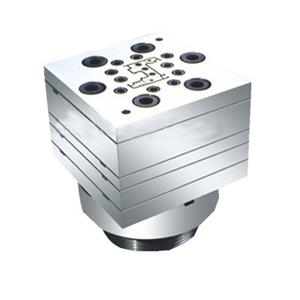
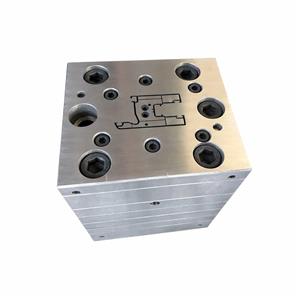
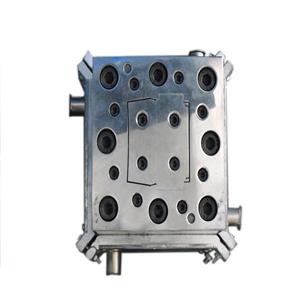
A PVC extrusion mold — also called an extrusion die — is a precision-machined steel tool that shapes molten polyvinyl chloride into a continuous cross-sectional profile. The heated PVC compound is pushed through the die opening by a screw-driven extruder, then cooled and cut to length downstream.
Common products made with PVC extrusion molds include:
UPVC window and door frame profiles
Electrical cable trunking and conduit
Water supply and drainage pipes
Ceiling panels, wall cladding, and skirting boards
PVC foam board and hollow panels
The die geometry directly controls wall thickness, internal chamber count, and surface finish. A poorly designed die produces uneven flow, rough surfaces, and dimensional deviations that scrap entire production runs.
2. Why Source PVC Extrusion Molds from China?
China has become the world's largest hub for plastic extrusion mold manufacturing. Several structural advantages explain the trend.
Cost efficiency. Chinese mold shops typically quote 30–50 % below European or North American equivalents for comparable steel grades and tolerances. Lower labor costs and a mature domestic supply chain for tool steel contribute to the gap.
Massive production cluster. Cities like Huangshi in Hubei province house dozens of specialized extrusion mold factories within a single industrial district. That concentration creates a deep talent pool of engineers and CNC machinists with decades of hands-on experience.
Growing export track record. Leading Chinese manufacturers now ship molds to the United States, Germany, Turkey, Indonesia, Nigeria, and beyond. Industry events like Chinaplas — scheduled for April 21–24, 2026, in Shanghai — showcase the latest Chinese die and calibrator technology to a global audience of over 320,000 professional visitors.
3. 7 Criteria for Evaluating a PVC Extrusion Mold Manufacturer
Not all suppliers deliver the same quality. Use the following checklist during your supplier audit.
Years in business. Look for at least 10 years of continuous mold production. Longer track records signal process stability and accumulated die-design data.
In-house CNC capacity. The factory should own its own wire-cut EDM, CNC milling, and surface-grinding equipment rather than outsourcing critical operations.
Steel sourcing transparency. Reputable manufacturers disclose the exact steel brand (e.g., Swedish Assab, German Schmolz + Bickenbach) and provide mill certificates.
Trial-run capability. The mold must be tested on an actual extruder before shipping. Ask for video evidence and sample profiles with dimensional measurements.
Certifications. High-Tech Enterprise Certificates, ISO compliance, and membership in regional mold associations all add credibility.
Reference projects. Request a list of countries and profile types the factory has supplied. Diversified export experience reduces risk.
After-sales support. Confirm warranty length, remote troubleshooting availability, and whether the supplier can dispatch engineers overseas if needed.
4. Steel Grades and Die Design: What Buyers Must Know
The extrusion die is only as good as the steel it is machined from. Two properties matter most: hardness (to resist wear from filled PVC compounds) and corrosion resistance (to withstand HCl gas released during processing).
| Steel Grade | Hardness (HRC) | Best For |
|---|---|---|
| 4Cr13 (Chinese) | 28–32 | Standard UPVC profiles, pipes |
| 38CrMoAl (Nitrided) | 38–42 surface | High-output lines, abrasive fillers |
| H13 / SKD61 | 48–52 | Long-run dies, co-extrusion molds |
Beyond steel selection, die land length is critical. A longer land zone stabilizes melt flow and improves surface quality — especially important for multi-chamber window profiles where wall thicknesses vary from 1.2 mm to 2.5 mm across the same cross-section.
Experienced manufacturers use flow-simulation software before CNC machining to predict pressure distribution and optimize runner geometry. ASTM D1784 provides the classification system for rigid PVC compounds used in extrusion, helping both the die designer and the buyer confirm that the mold suits the intended resin formulation.
5. Typical Lead Times, Packaging, and Shipping
Lead time varies with profile complexity. Simple pipe dies may ship in 25–30 days. Multi-chamber window profile dies with co-extrusion layers usually require 45–60 days from deposit confirmation.
Reliable suppliers protect finished molds in heavy-duty wooden crates to prevent damage in transit. Some factories offer custom logo printing on the mold body — a useful detail for OEM buyers building their own brand identity.
Payment terms in the Chinese mold industry typically follow a standard pattern:
30–50 % deposit by T/T to start production
Balance paid after trial-run approval, before shipment
L/C at sight accepted by some manufacturers for larger orders
Shipping routes depend on the buyer's location. FOB from Chinese ports like Shanghai, Ningbo, or Wuhan (via the Yangtze River) is most common. Air freight is available for urgent calibrator or die-head replacements.
6. Frequently Asked Questions
Q: What is the typical warranty on a PVC extrusion mold from China?
A: Most established manufacturers offer a 1-year warranty covering defects in material and workmanship. Some will send an engineer to the buyer's factory for on-site adjustments if issues arise during production.
Q: Can a Chinese mold factory design a die from my profile drawing alone?
A: Yes. Experienced factories accept 2D drawings (DWF/DXF) or 3D step files. Their engineering team will design the die, run flow simulation, and propose runner layout before CNC machining begins.
Q: How do I verify mold quality before it leaves the factory?
A: Request a trial-run video showing the mold producing profiles on a live extruder. Ask for sample profiles with measured dimensions. Reputable manufacturers always test molds in-house before crating for shipment.
Q: Do PVC extrusion mold manufacturers in China also supply full extrusion lines?
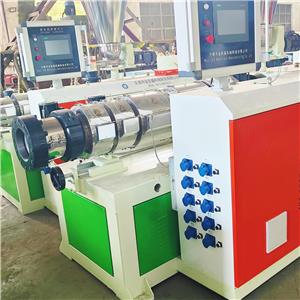
A: Some do. Factories that have transitioned to an industry-and-trade integration model can supply the complete extrusion line — extruder, die, calibration table, haul-off, and cutter — along with auxiliary equipment.
7. Conclusion & Next Steps
Choosing a PVC extrusion mold manufacturer in China requires more than comparing price quotes. Steel grade, die design methodology, trial-run capability, and after-sales warranty should all weigh into your decision.
At Huangshi Zhongjie Mould Co., Ltd., our team has spent over 16 years designing and manufacturing extrusion molds for customers across Europe, the Middle East, and Southeast Asia. We hold a High-Tech Enterprise Certificate, maintain membership in the Extrusion Mould Association of Huangshi City, and test every mold on a live extruder before it ships. Whether you need a single UPVC window profile die or a complete co-extrusion production line, we are ready to help.
Contact our team today to discuss your project requirements and receive a detailed quotation — typically within 24 hours.
Sources & References
The following sources were referenced in the preparation of this article:
Precedence Research / GlobeNewsWire — Global Plastic Processing Machinery Market Size 2026–2035
ASTM International — D1784-20 Standard Classification for Rigid PVC & CPVC Compounds
Chinaplas 2026 Official Website — International Exhibition on Plastics & Rubber Industries
Grand View Research — Global Extruded Plastics Market Size & Growth Report, 2024–2030