WPC Extrusion Die Design Guide | Key Factors 2026
WPC Extrusion Die Design Guide: 6 Critical Factors Engineers Must Get Right

Manager, Huangshi Zhongjie Mould Co., Ltd. · Published March 27, 2026
📑 Table of Contents
A well-designed WPC extrusion die is the single most important variable separating a profitable wood-plastic composite production line from one plagued by surface defects, dimensional drift, and excessive scrap. This WPC extrusion die design guide breaks down the six engineering factors that determine die performance — from flow channel geometry to calibrator integration. Whether you are specifying a new die or troubleshooting an existing one, these principles apply across PE-based, PVC-based, and PP-based WPC formulations.
1. What Is WPC Extrusion Die Design?
WPC extrusion die design is the engineering discipline of creating a shaped steel tool — the die — through which a molten blend of wood fibers and thermoplastic polymer is forced to produce a continuous profile. Wood-plastic composite (WPC) extrusion is a manufacturing process in which wood fibers or wood flour are combined with thermoplastics. The die defines the cross-sectional geometry of the finished product, while the downstream calibrator locks in final dimensions during cooling.
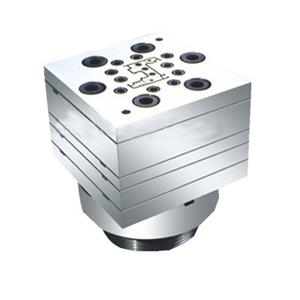
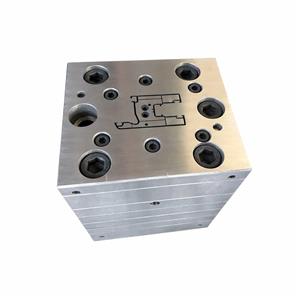
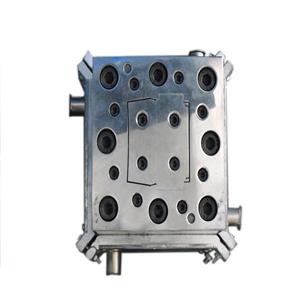
A complete WPC die system includes three interdependent components: the die head (melt distribution section), the die land (shaping section), and the calibrator (vacuum sizing and initial cooling). Each must be designed as a unified system. A mismatch between any two components creates uneven flow, warping, or inconsistent wall thickness.
2. Why WPC Dies Differ From Standard Plastic Extrusion Dies
Designing a die for WPC is fundamentally more complex than for neat PVC or PE profiles. Three material properties drive this difference:
Thermal sensitivity — WPCs are heat-sensitive materials, and precise temperature control during extrusion is critical to prevent degradation, which can affect the physical properties of the final product.
Excessive shear heating in a poorly designed flow channel degrades the wood fibers, causing dark spots and reduced structural integrity.
Abrasive fillers — Because WPCs contain abrasive constituents such as mineral fillers or glass fibers, the extrusion process can result in increased wear and tear on the machinery.
Die steel must resist erosion far more than in conventional plastic extrusion tooling.
Feed variability — The variability in feed composition, especially when using recycled materials, can make achieving consistent product quality more challenging.
The die's flow channels need wider processing tolerance to absorb this variability without producing defects.
Creating a die design that certifies the characteristics of the WPC formulation demands extensive knowledge and experience, and a poorly designed die can lead to defects in the extruded product. This is why many buyers seek mold manufacturers with decades of hands-on WPC die engineering — not just general extrusion tooling shops.
3. 6 Critical Factors in WPC Extrusion Die Design
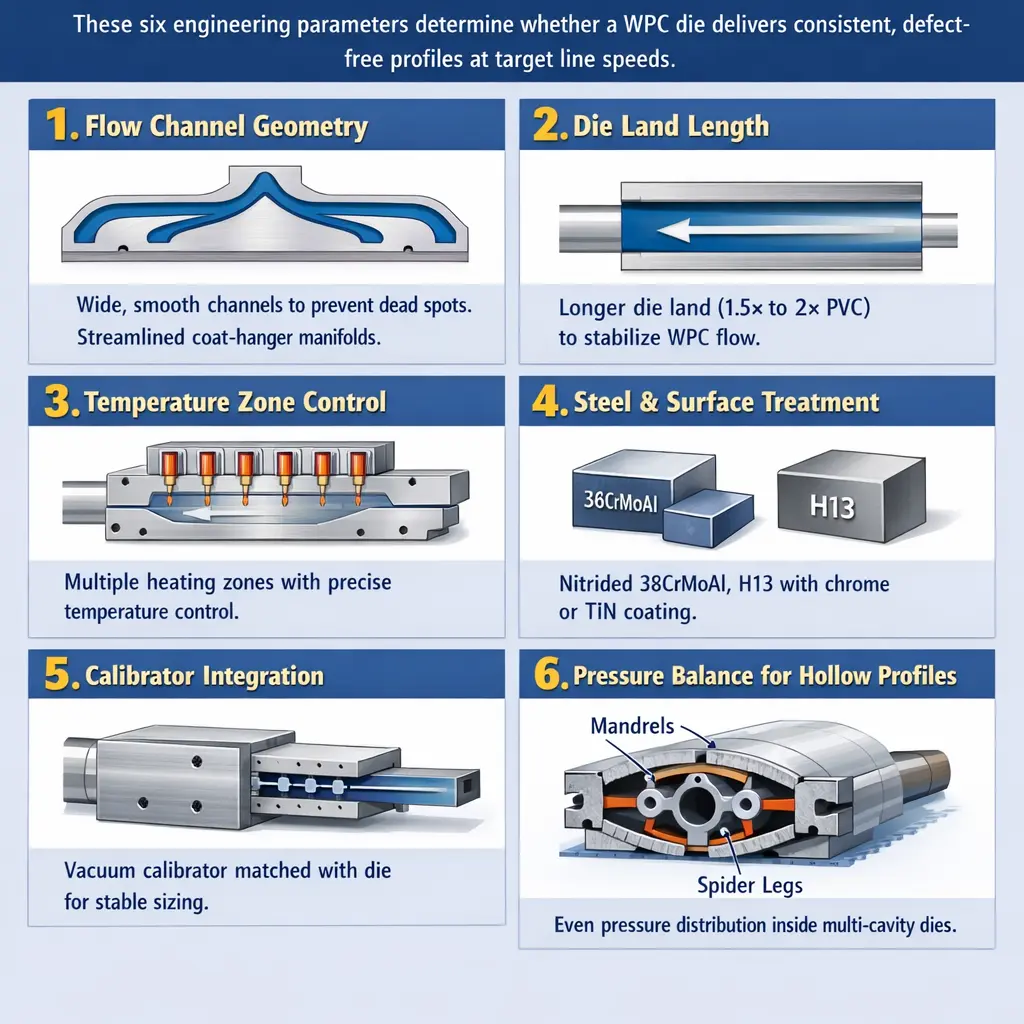
These six engineering parameters determine whether a WPC die delivers consistent, defect-free profiles at target line speeds.
3.1 Flow Channel Geometry
The flow channel distributes melt evenly across the die width. For WPC, channels must be wider and smoother than for neat polymers to prevent dead spots where wood fiber can accumulate and burn. Streamlined, coat-hanger-style manifolds reduce pressure drop and residence time.
3.2 Die Land Length
The die land — the parallel section before the exit — shapes the profile. WPC typically requires a longer land length (1.5× to 2× that of standard PVC tooling) to stabilize flow and compensate for the higher melt viscosity caused by wood flour loading.
3.3 Temperature Zone Control
WPC dies require multiple independent heating zones with tight tolerance (±2 °C). Overheating above 200 °C in PE-based formulations or above 190 °C in PVC-based WPC causes wood fiber degradation. Cartridge heaters with thermocouple feedback at each zone allow engineers to fine-tune the thermal profile along the flow path.
3.4 Steel Selection and Surface Treatment
Because WPC compounds are highly abrasive, die steel must be harder than what standard PVC extrusion demands. Common choices include nitrided 38CrMoAl (surface hardness HV 900+) and H13 (4Cr5MoSiV1) with chrome plating. Hard-chrome or titanium nitride coatings extend die life by 30–50% compared to untreated tool steel in high-fill WPC applications.
3.5 Calibrator Integration
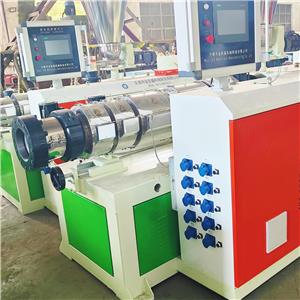
Uniform feeding is the key to direct extrusion of hollow, thin-wall profiles — slight variations in bulk density of WPC material can cause surging and break thin-walled profiles as they're pulled through vacuum calibrators. The calibrator must be designed in tandem with the die exit to ensure the still-soft profile enters the vacuum sizing sleeve without distortion. Cooling water temperature, vacuum level, and sleeve length all interact with die exit swell.
3.6 Pressure Balance Across Multi-Cavity or Hollow Profiles
Hollow WPC profiles — common in decking and fencing — require internal mandrels supported by spider legs or bridge-style distributors inside the die. Uneven pressure around these supports creates weld lines that weaken the profile. Finite element analysis (FEA) of flow distribution is standard practice among experienced die designers to minimize this risk.
4. WPC Die Types: Solid, Hollow, and Co-Extrusion
Different end products require different die architectures. The table below compares the three main WPC die categories:
| Die Type | Typical Products | Design Complexity | Key Challenge |
|---|---|---|---|
| Solid Profile Die | Fence pickets, trim boards, baseboards | Low–Medium | Uniform melt distribution across wide profiles |
| Hollow Profile Die | Decking boards, railings, multi-chamber profiles | Medium–High | Mandrel support / weld-line strength |
| Co-Extrusion Die | Capped decking, multi-color trims, window lineals | High | Layer adhesion, cap-to-core thickness ratio |
Co-extrusion technology has revolutionized the manufacturing of wood-plastic composites, enabling a new generation of high-performance materials. By simultaneously extruding multiple layers of different polymer formulations, co-extrusion enhances surface properties — such as scratch resistance, UV stability, and color retention — while maintaining a cost-effective core. A co-extrusion die requires a secondary flow channel that merges with the core melt just before the die exit, adding substantial design complexity.
A typical co-extrusion WPC die consists of a core WPC layer (often 60% wood flour, 30% polymer, 10% additives) and a thin polymer cap layer. Advanced 360° co-extrusion capping technology significantly improves resistance to UV exposure, staining, and surface wear. Designing the cap-layer channel requires precise thickness control — typically 0.3–0.8 mm — to achieve protection without excessive material cost.
5. Industry Standards That Shape WPC Die Specifications
Die design does not happen in a vacuum. The end product must comply with performance standards that flow backward into die specifications:
ASTM D7032 — ASTM D7032 is a standard specification that establishes a framework for evaluating and rating the performance of wood-plastic composite (WPC) and plastic lumber products used in outdoor structures like decks, stairs, guards, and handrails.
Die designers use span-rating requirements from this standard to determine minimum wall thickness and hollow-section geometry.
ASTM D6662 — Covers polyolefin-based plastic lumber decking boards. It provides flexural and compressive property benchmarks that inform die land design for PE-based WPC products.
ISO 9001 — Quality management system certification ensures that die manufacturing follows documented, repeatable processes from steel procurement through final inspection.
Buyers attending CHINAPLAS, which takes place April 21–24, 2026, at the National Exhibition and Convention Center (NECC), Hongqiao, Shanghai, can evaluate WPC die manufacturers in person. The event is expected to reach over 390,000+ sqm exhibition areas with over 4,000 exhibitors from 40 countries and regions. Meeting your die supplier face-to-face at events like CHINAPLAS or K Fair in Düsseldorf accelerates the technical alignment process.
6. Why WPC Die Design Matters More Than Ever in 2026
The commercial stakes behind WPC die quality keep rising. The global wood plastic composites market size was estimated at USD 8.89 billion in 2025 and projected to reach USD 21.51 billion by 2033, growing at a CAGR of 11.7% from 2026 to 2033. This growth is concentrated in decking, cladding, fencing, and increasingly in automotive interiors.
For die buyers, this market expansion means two things. First, production volumes are scaling up, which puts greater stress on die durability and requires harder steels and better surface treatments. Second, product sophistication is increasing — co-extruded profiles with multi-color finishes and embossed textures demand dies with tighter tolerances and more precise flow channels.
Manufacturers with deep WPC die experience — such as those who have designed and exported extrusion molds for over 16 years across PE, PVC, and foam formulations — are positioned to handle this growing complexity. At Huangshi Zhongjie Mould, our engineering team includes professionals with 20+ years of hands-on die design across all major WPC material systems.
7. Frequently Asked Questions
Q: What is the typical lead time for a custom WPC extrusion die?
A: A single WPC extrusion die takes approximately 35–45 days after deposit, depending on profile complexity and whether co-extrusion channels are required. Rush timelines may be negotiated with advance coordination.
Q: Can an existing PVC extrusion die be modified for WPC production?
A: Generally not recommended. WPC compounds are more abrasive and thermally sensitive than neat PVC. Flow channels, steel grade, and temperature zone layout usually need to be redesigned from scratch for WPC formulations.
Q: How long does a WPC extrusion die last before it needs replacement?
A: With proper steel selection (nitrided 38CrMoAl or chrome-plated H13) and regular maintenance, a well-made WPC die can produce profiles for 3–5 years under normal operating conditions. High-fill or highly abrasive formulations may shorten die life.
Q: What information should I provide to a die manufacturer for quoting?
A: Supply a profile drawing (CAD preferred) with dimensions, your WPC formulation details (wood-to-plastic ratio, polymer type, additives), target output rate (kg/h), and the extruder model you are using. A physical sample also helps if no drawing is available.
8. Conclusion & Next Steps
Getting WPC extrusion die design right requires alignment across six engineering factors: flow channel geometry, land length, thermal zoning, steel selection, calibrator integration, and pressure balance. Each factor interacts with the others, which is why a die should always be designed as a complete system — not a collection of independent parts.
At Huangshi Zhongjie Mould Co., Ltd., we have built WPC extrusion dies for clients across Europe, the Americas, the Middle East, and Southeast Asia for over 16 years. Our product range covers solid, hollow, and co-extrusion WPC dies alongside PE, PVC, and foam board extrusion molds. We hold a High-Tech Enterprise Certificate and are a recognized member of the Extrusion Mould Association of Huangshi City.
If you are planning a new WPC extrusion line or upgrading an existing die, we invite you to request a free WPC extrusion die design consultation from our engineering team. Send us your profile drawing, and we will return a detailed proposal within 48 hours.
Request a Free WPC Die Quote →
Sources & References
The following sources were referenced in the preparation of this article:
ASTM International — D6662 Specification for Polyolefin-Based Plastic Lumber Decking Boards
Grand View Research — Wood Plastic Composites Market Size & Industry Report, 2033
CHINAPLAS 2026 — International Exhibition on Plastics and Rubber Industries (April 21–24, Shanghai)
K Trade Fair — World's No. 1 Trade Fair for Plastics & Rubber (Messe Düsseldorf)
Plastics Technology — First Direct Extrusion of Complex WPC Window Profiles