UPVC Window Profile Mold Supplier Guide 2026
How to Choose a UPVC Window Profile Mold Supplier: A 2026 Buyer's Guide
Manager, Huangshi Zhongjie Mould Co., Ltd. · Published April 29, 2026
📑 Table of Contents
Selecting the right UPVC window profile mold supplier is one of the highest-leverage decisions a window manufacturer or extrusion line operator makes. The mold determines dimensional accuracy, surface finish, and long-term production stability — none of which can be corrected cheaply after the tooling is built. This guide gives procurement engineers a structured framework for evaluating UPVC window profile mold suppliers, comparing mold types, and aligning tooling specifications with international compliance standards before placing an order.
1. What Is a UPVC Window Profile Mold?
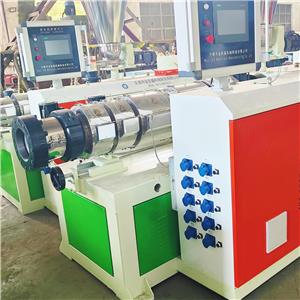
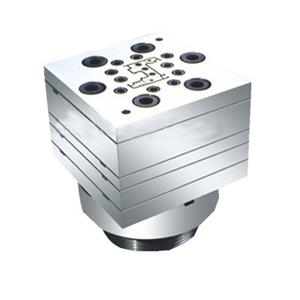
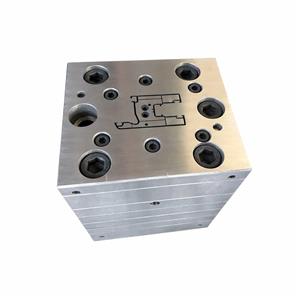
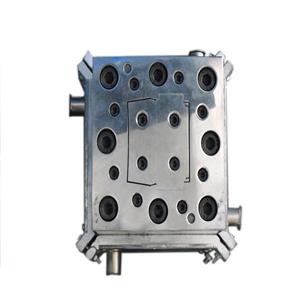
A UPVC window profile mold — also called a UPVC extrusion die — is a precision steel tool through which unplasticized polyvinyl chloride compound is forced under heat and pressure to produce a continuous profile with a fixed cross-section. The die defines the shape of window frames, sashes, beads, and reinforcement channels used in residential and commercial construction.
UPVC (unplasticized PVC) is the material of choice for window profiles because it combines high rigidity, weather resistance, low thermal conductivity, and dimensional stability over decades of service. Unlike standard PVC, UPVC contains no plasticizers, which makes it stiffer and more demanding to process. The extrusion mold must compensate for UPVC's relatively narrow processing window and higher melt viscosity through precise flow channel engineering.
A complete mold system for UPVC window profiles includes the die head, the shaping die, and the calibrator — a vacuum-cooled sizing sleeve that locks in profile dimensions immediately after the die exit. All three must be engineered as a matched set.
2. Why UPVC Window Profile Mold Supplier Selection Defines Your Production Quality
A poorly specified UPVC window profile mold creates problems that compound with every meter of output. Warped frames, inconsistent wall thickness, drag marks on visible surfaces, and corner joint misalignment all trace back to die design or manufacturing deficiencies — not the extruder or the compound.
Three failure modes are especially common when buyers choose the wrong supplier:
Uneven melt flow — An unbalanced flow channel causes one side of the profile to exit faster than the other, producing a curved or bowed section. Correcting this after the die is built requires rework that costs time and money.
Calibrator mismatch — A calibrator not designed for the specific die exit geometry causes the still-soft profile to distort as it enters the vacuum sleeve, creating dimensional scatter across production batches.
Premature die wear — UPVC compounds with calcium carbonate or titanium dioxide fillers are moderately abrasive. Tooling made from unsuitable steel grades shows scoring and surface degradation within months, narrowing dimensional tolerances and raising scrap rates.
Choosing a supplier with documented UPVC-specific die engineering experience — not just general extrusion tooling capability — prevents all three failure modes at the design stage.
3. Five Questions to Ask Any UPVC Window Profile Mold Supplier
Use these questions during supplier qualification calls or factory audits to distinguish capable manufacturers from generalist tooling shops.
How many UPVC window profile dies have you built and exported? — Volume matters. A supplier who has built hundreds of window frame dies across multiple frame systems (casement, tilt-and-turn, sliding) has encountered and solved a wider range of engineering problems than one with limited UPVC experience.
What steel do you use for UPVC extrusion dies, and why? — Acceptable answers reference 38CrMoAl (nitrided), H13 with chrome plating, or equivalent tool steels chosen specifically for UPVC's abrasion profile. Vague answers like "high-quality steel" signal a lack of engineering depth.
Do you test the mold on a trial run before shipment? — Pre-shipment testing on a comparable extruder is non-negotiable for UPVC window profile dies. Ask for a test-run report or video showing profile cross-section measurements and surface condition.
Can you supply the calibrator and downstream equipment together with the die? — Integrated tooling supply from a single source eliminates compatibility gaps between the die exit and the calibrator inlet — the most common source of post-installation problems.
What after-sales support do you provide if dimensional issues appear in production? — A credible supplier offers at minimum a one-year warranty and the ability to dispatch engineers on-site if remote troubleshooting proves insufficient.
4. Common UPVC Window Profile Types and Their Mold Requirements
UPVC window systems vary significantly in profile complexity. The mold requirements scale accordingly:
| Profile Type | Typical Use | Chamber Count | Key Die Challenge |
|---|---|---|---|
| Main Frame Profile | Outer window frame | 3–6 chambers | Mandrel support, weld-line strength |
| Sash / Casement Profile | Opening window sash | 3–5 chambers | Uniform wall thickness, tight tolerance |
| Glazing Bead | Glass retention clip | 1–2 chambers | Snap-fit geometry, surface finish |
| Reinforcement Channel | Steel insert housing | 1–3 chambers | Tight inner bore, dimensional stability |
| Co-extruded Colored Profile | Foiled or tinted outer face | 3–6 chambers + cap layer | Cap-layer adhesion, 0.3–0.6 mm cap thickness |
Multi-chamber profiles are the industry standard for thermally efficient window systems. Each internal chamber adds an air barrier that reduces heat transfer across the frame section. From a die engineering perspective, additional chambers mean more internal mandrels, more spider-leg support structures, and more potential weld lines — each requiring careful flow balancing during die design.
5. Compliance Standards That Shape UPVC Profile Mold Design
A UPVC window profile mold supplier working at the professional level designs tooling around the end-product standards the profile must satisfy. The three most relevant frameworks for global buyers are:
EN 12608 (Europe) — This European standard classifies UPVC profiles for windows and doors by impact resistance, weather exposure class, and dimensional tolerance class. Class A profiles require the tightest dimensional tolerances, which translate directly into stricter die land tolerances and calibrator precision requirements.
BS 7412 (United Kingdom) — Specifies performance requirements for PVC-U window and door assemblies, covering material formulation, profile geometry, and joint strength. UPVC dies destined for the UK market must produce profiles that pass weld corner strength tests defined in this standard.
ASTM D4216 (North America) — Covers rigid PVC and CPVC compounds used in building products, including window profiles. Material classification under this standard affects processing temperatures and therefore die temperature zone design.
Buyers attending K Fair in Düsseldorf or CHINAPLAS in Shanghai routinely use these events to align compliance requirements with shortlisted Chinese mold suppliers before committing to an order — a practice that significantly reduces post-delivery disputes over dimensional non-conformance.
6. What a Reliable UPVC Window Profile Mold Supplier Delivers Beyond the Mold
The mold itself is only part of the value a professional supplier provides. Procurement managers sourcing UPVC extrusion tooling from China should expect — and demand — the following supporting services:
Profile drawing review — An engineering team that flags potential flow problems in the profile geometry before cutting steel saves expensive rework cycles. Suppliers with 15–20 years of UPVC die experience identify problematic cross-sections that inexperienced shops miss.
Material-matched die design — The compound formula (stabilizer type, filler loading, impact modifier percentage) affects melt viscosity and processing temperature. A competent supplier adjusts land length, channel depth, and heating zone layout to match the specific UPVC compound the buyer runs.
Full system supply — Die, calibrator, haul-off, and cutting table from a single source eliminates the integration risk of mixing components from different manufacturers.
Documented pre-shipment test — A test-run report with cross-section measurements, surface photographs, and processing parameters gives the buyer confidence before the tooling leaves the factory.
Wooden crate export packaging — Precision UPVC dies are sensitive to impact and moisture. Wooden crate packaging with desiccant protection is the baseline for ocean freight shipments of extrusion tooling.
7. Frequently Asked Questions
Q: What is the standard delivery time for a UPVC window profile mold from China?
A: Most professional Chinese suppliers complete a standard UPVC window profile mold within 35–45 days after receipt of deposit and approved profile drawing. Complex multi-chamber or co-extrusion dies may require an additional 5–10 days. Confirm the timeline in writing before placing the order.
Q: How many chambers should a thermally efficient UPVC window profile have?
A: European passive house and low-energy building standards generally require a minimum of 5–6 chambers in the main frame and sash profiles. More chambers increase thermal resistance (lower U-value) but also increase die complexity and tooling cost.
Q: Can one UPVC window profile mold supplier provide dies for an entire window system?
A: Yes — and this is the preferred approach. A single supplier designing all dies in a window system (frame, sash, bead, reinforcement channel) ensures dimensional compatibility across profiles and simplifies post-installation troubleshooting if any profile requires adjustment.
Q: What payment terms are typical for UPVC extrusion tooling orders from China?
A: T/T (telegraphic transfer) is the standard method — typically 30–50% deposit to start production, with the balance paid before shipment. L/C at sight is accepted by established suppliers for larger orders. Avoid 100% advance payment to suppliers without a verifiable export track record.
8. Conclusion & Next Steps
Finding the right UPVC window profile mold supplier requires evaluating engineering depth, steel selection, pre-shipment testing discipline, compliance knowledge, and full-system supply capability — not just quoted price. The questions and criteria in this guide give procurement engineers a repeatable framework for shortlisting suppliers and reducing the risk of costly tooling failures.
At Huangshi Zhongjie Mould Co., Ltd., our engineering team has designed and exported UPVC window and door profile dies to clients in Europe, the Middle East, and Southeast Asia for over 16 years. We hold a High-Tech Enterprise Certificate, maintain active membership in the Extrusion Mould Association of Huangshi City, and back every mold with a one-year warranty and pre-shipment test documentation.
If you are sourcing tooling for a new UPVC window extrusion line or replacing a worn die set, contact our UPVC window profile mold team with your profile drawing. We return a detailed technical proposal and price quotation within 48 hours.
Request a Free UPVC Mold Quote →
Sources & References
The following sources were referenced in the preparation of this article:
CEN — EN 12608: Unplasticized PVC Profiles for Windows and Doors Classification & Requirements
BSI Group — BS 7412: Specification for PVC-U Windows and Doorsets
CHINAPLAS 2026 — International Exhibition on Plastics and Rubber Industries, Shanghai
K Trade Fair Düsseldorf — World's Leading Trade Fair for Plastics & Rubber
Plastics Technology Online — Industry Reference for Extrusion Processing & Tooling