What is a Plastic Extruder and How Does it Work for You?
Millions upon millions of plastic components roll off production lines every single year, a number that is only poised to grow as polymers continue to evolve as a cornerstone of modern manufacturing. From the medical tubing in hospitals to the weather seals on skyscrapers, these essential parts share a common origin story.
While there are various methods to shape thermoplastics, one of the most ubiquitous and efficient is through plastic extrusion services. This manufacturing style is designed to create long, continuous profiles that are consistent in cross-section from the first foot to the millionth. But what is the engine behind this massive output? The answer lies in a piece of industrial machinery known as the plastic extruder.
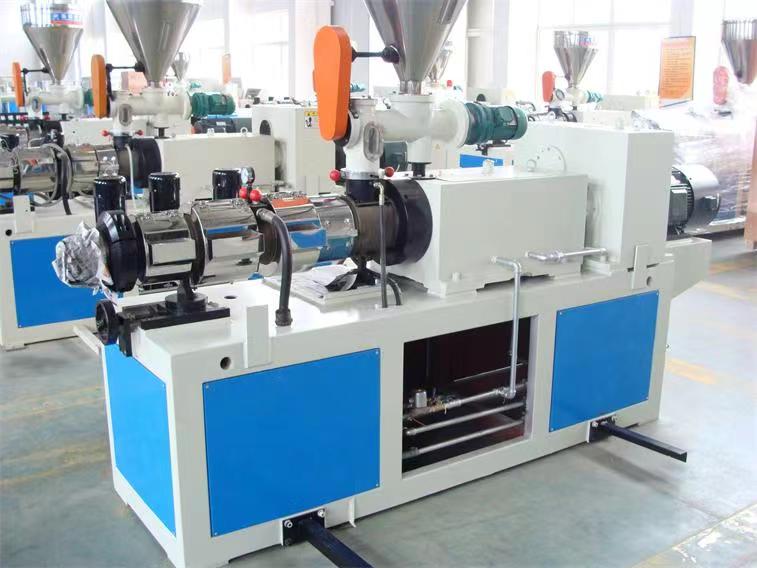
For manufacturers and procurement specialists alike, understanding what is an extruder is critical to optimizing your supply chain. How does extruder work to transform raw pellets into precision parts? And crucially, how does it work for you? In this comprehensive guide, Zhongjie answers these questions, diving deep into the mechanics, the process, and the human expertise required to run this vital plastic extrusion equipment.
The Ins and Outs of a Plastic Extruder
A plastic extruder is the heartbeat of companies like Zhongjie. It is the workhorse that allows us to manufacture high-quality products every single day. However, it is not a "set it and forget it" device. This large, sophisticated machine operates under the watchful eye of highly trained professionals—specifically, the plastic extruder operator—who ensures that every parameter is dialed in for perfection.
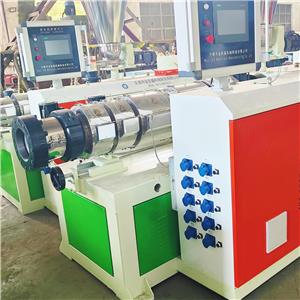
At its core, what is a plastic extruder? It is essentially a high-torque pump. It takes solid plastic pellets (or granules), melts them using a combination of friction and external heat, and continuously pushes that molten material through a custom-made tool called a die. This process creates everyday plastic products with incredible efficiency.
To understand the machine, we need to break it down into its key components.
Extruder Screw
This isn't your average hardware store fastener. The extruder screw is a precision-engineered steel shaft, typically ranging from 0.75 to 10 inches in diameter for industrial applications. It resides inside the heated barrel and is the primary mechanism for moving material.
As the screw rotates, its spiral flights act like an Archimedes screw, conveying the plastic pellets forward. But it does more than just move them; the friction generated by the screw against the barrel walls creates shear heat, which does the heavy lifting of melting the plastic. The design of the screw—its length, depth, and pitch—is tailored to specific materials to ensure a consistent, homogenous melt.
Cooling Mechanisms
Once the plastic exits the die, it is hot, soft, and vulnerable. To maintain its shape, it must be cooled rapidly but controlled. Not every plastic extrusion equipment line uses the same cooling setup. Some utilize air chillers where cool air is blown over the profile to settle the plastic gently. Others use long water baths or vacuum sizing tanks where the hot product is submerged to freeze its dimensions instantly. The choice of cooling depends heavily on the polymer type and the complexity of the profile.
Metal Die
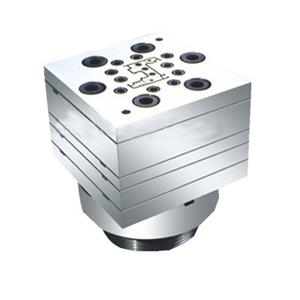
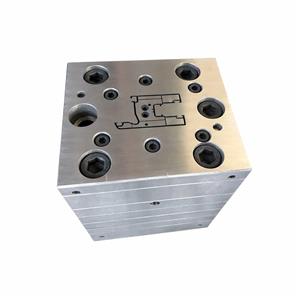
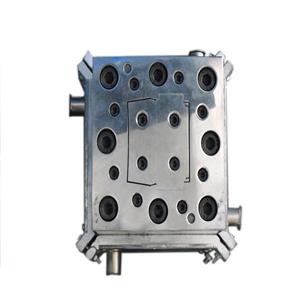
If the extruder is the heart, the metal die is the brain. The die is what gives the melted plastic its final shape. This component is a custom build, unique to every single project. Whether you need a simple round tube or a complex window track, the die dictates the geometry. Finding a reliable source for a plastic extrusion die in china is often the most critical step in setting up a successful production run.
How Does a Plastic Extruder Work?
While the initial design and material selection are crucial pre-production steps, the extruder itself is where the physical transformation happens. Successful extrusion is a symphony of heat, pressure, and speed. Collaboration with your extrusion partner—like Zhongjie—is vital here, as we help optimize production parameters to match your specific design constraints.
Feeding & Melting
The process begins at the hopper. Raw material, usually in the form of virgin or recycled pellets, is fed into this funnel-like reservoir. Gravity pulls the pellets down into the "feed throat" of the extruder barrel.
Inside the barrel, the rotating screw takes over. As it pushes the material forward, the pellets enter different zones. First is the feed zone, where pellets are preheated. Next is the compression zone, where the channel depth decreases, forcing air out and compressing the pellets against the heated barrel walls. Finally, in the metering zone, the plastic is fully melted into a viscous liquid, ready for shaping.
Filtering
Quality control starts before the plastic even leaves the machine. As the melted plastic reaches the end of the screw, it passes through a screen pack and a breaker plate. This assembly acts as a filtration system, catching any contaminants—like unmelted solids or foreign debris—ensuring that only clean, uniform material passes through to the die. This step is essential for maintaining structural integrity and surface finish.
Shaping
This is the moment of truth. The filtered, molten plastic is forced under immense pressure through the die. The die acts as a mold, shaping the amorphous blob into a continuous profile. For example, if you are running a profile extruder to make window frames, the plastic emerges from the die in the exact cross-section of that frame.
However, physics plays a role here. Plastic tends to swell as it exits the die (a phenomenon called "die swell"), so the die must be engineered slightly differently from the final part dimensions to compensate for this behavior.
Cooling & Sizing
As the profile exits the die, it enters the sizing and cooling equipment. For hollow or complex shapes, vacuum sizers are often used to hold the plastic against a shaping tool while it cools, preventing it from collapsing. The product travels through water tanks or air racks, slowly solidifying until it is rigid enough to be handled. This stage relieves internal stresses and stabilizes the final dimensions.
Cutting & Finishing
The final step of the profile extrusion process is cutting the continuous stream into usable lengths. A traveling saw or a guillotine cutter slices the product to pre-determined specifications. Depending on the project requirements, secondary services can be applied inline or offline, such as punching holes, applying adhesive tape, or even co-extruding a soft seal onto a rigid base using a specialized solid baseboard co-extrusion mold.
Common Products Made by a Plastic Extruder
The versatility of extrusion means its products are everywhere. From the infrastructure hidden behind walls to the consumer goods on store shelves, the impact of a plastic extruder machine is immense. Common examples include:
Construction: Window frames, vinyl siding, fencing, and decking.
Medical: IV tubing, catheters, and sterile packaging.
Automotive: Weatherstripping, decorative trim, and wire harness conduits.
Utilities: PVC pipes for water and drainage, conduit for electrical wires.
Retail: Price tag holders, shelf talkers, and point-of-purchase displays.
Zhongjie: Experts in Plastic Extruders and Extrusion Services
Understanding the machinery is one thing; mastering it is another. Since our inception, Zhongjie has established itself as a premier manufacturer in the extrusion industry. We don't just run machines; we engineer solutions.
Our expertise extends beyond simple profiles. We specialize in complex die manufacturing and high-precision extrusion for global markets. Whether you need a standard profile extruder setup or a custom co-extrusion line, our team has the technical depth to deliver.
Summary
A plastic extruder is far more than a melting pot; it is a sophisticated system that demands precision engineering and skilled operation. From the geometry of the screw to the design of the die, every element influences the quality of the final profile. By partnering with an experienced manufacturer like Zhongjie, you gain access to decades of expertise in plastic extrusion. We ensure that your concepts are transformed into tangible, high-quality products efficiently and cost-effectively. Contact us today to discuss how our extrusion die capabilities can elevate your next project.