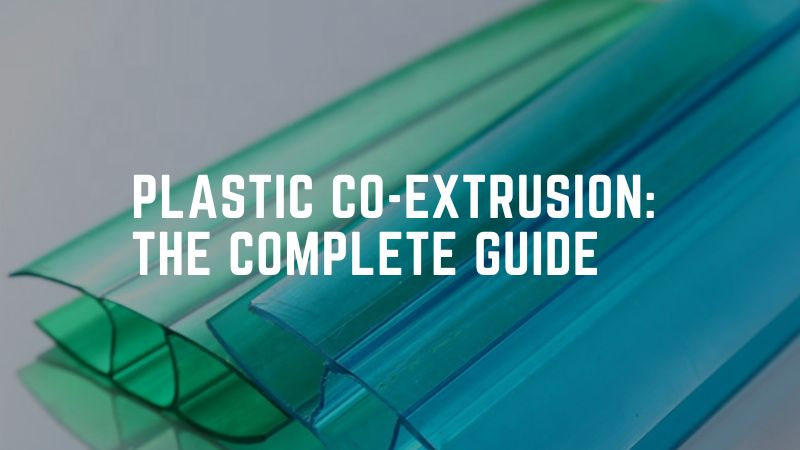
Plastic Co-Extrusion: The Complete Guide
In the world of polymer manufacturing, precision is paramount. When it comes to achieving consistency, durability, and multi-functional performance in plastic components, plastic coextrusion stands out as a superior production method.
At Zhongjie, we have spent two decades perfecting this art. As a premier PVC WPC Extrusion Mould Manufacturer, we understand that combining materials isn't just about layering plastics—it's about engineering solutions. In this comprehensive guide, we will explore the advantages, technical processes, and real-world applications of co-extrusion technology.
What is Plastic Co-Extrusion?
Simply put, the co extrusion process involves melting and uniformly feeding two or more different plastic materials into a single extrusion die. Unlike standard extrusion, which produces a product from a single material, co-extrusions allow manufacturers to merge distinct polymers to create a single profile with combined properties. For example, a rigid PVC core can be capped with a weather-resistant acrylic layer, all in one continuous operation.
Difference Between Plastic Mono-Extrusion Vs. Plastic Co-Extrusion
Understanding the distinction between these two methods is critical for selecting the right manufacturing path.
| Feature | Plastic Mono-extrusion | Plastic Co-extrusion |
|---|---|---|
| Technology Age | Traditional, established method | Advanced, modern technique |
| Material layers | Single homogenous layer | Multiple distinct layers |
| Cost per Profile | Lower capital investment | Higher initial setup cost, but material savings long-term |
| Expertise Required | Standard technical knowledge | High-level engineering expertise required |
| Material Flexibility | Limited to one polymer property | Can combine cheap fillers with expensive functional surfaces |
Ultimately, while mono-extrusion is simpler, co-extruded pvc profiles offer superior strength, weatherability, and aesthetic versatility, often backed by stronger warranties.
Types of Plastic Co-extrusion
There are two primary variations of the plastic coextrusion process, each serving different manufacturing needs:
Feed Block Co-extrusion
In this method, multiple plastic melt streams are combined into a single laminar flow within a "feed block" system located upstream of the extrusion die. Valves inside the feed block allow for precise control over the flow rate of each layer. The primary advantage here is cost-effectiveness; the investment is generally lower compared to multi-manifold dies.
Die Co-extrusion
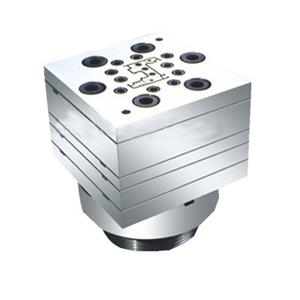
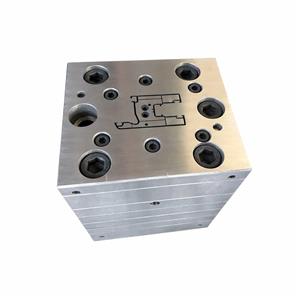
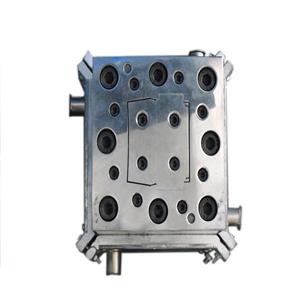
This method is more complex. It utilizes a specialized multi-manifold die where independent melt paths meet just before the die exit. This allows for exceptional control over layer thickness and flow rates, making it possible to process polymers with significantly different viscosities or melt temperatures. While the co extruder setup here requires higher capital investment, the precision is unmatched.
Benefits of Plastic Co-Extrusion over Extrusion
Why choose co-extrusion? The benefits are tangible:
Enhanced Durability: Combine a tough core with a UV-resistant outer layer for longer shelf life.
Cost Efficiency: Use recycled or lower-cost materials for the inner core while using premium materials only for the visible surface.
Design Freedom: Achieve complex functional properties, like soft-touch grips on rigid tools, in a single process.
Energy Savings: Often requires less energy per unit of functional performance compared to assembling separate parts.
Process of Plastic Co-Extrusion
Let’s break down the technical workflow utilized at Zhongjie’s manufacturing facility:
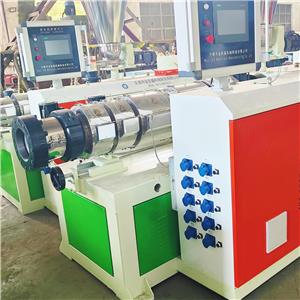
Step 1: Feed The Resin Into The Plastic Co-extrusion Machine
The process begins by mixing thermoplastic resins with colorants, UV stabilizers, or other additives. This mixture is fed into the hoppers of the separate extruders involved in the co extrusion process.
Step 2: Heating The Resin
The resin enters the barrel, where a rotating screw (spinning at up to 120 RPM) pushes it forward. Friction and external heaters gradually raise the temperature, typically between 200°C and 275°C, ensuring a consistent melt without degradation.
Step 3: Cooling the Resin
To prevent overheating, which can compromise the polymer's integrity, our machines utilize automated cooling fans. These maintain a stable melt temperature, critical for ensuring the layers bond correctly downstream.
Step 4: De-contamination
The molten plastic passes through a screen pack at the end of the barrel. This filtration step removes impurities, ensuring that the final co-extruded pvc profile is free of defects and mechanically sound.
Step 5: Extrusion
This is where the magic happens. The different melt streams converge in the die to form the final multi-layered profile. Whether combining two materials or five, the die shapes them into a cohesive unit. This is particularly useful in packaging plastic extrusion where barrier properties are essential.
Step 6: Cooling The Finished Products
Once the profile exits the die, it must be cooled immediately to retain its shape. We utilize sealed water baths or specialized cooling rolls for delicate profiles to ensure dimensional accuracy before the product is cut or spooled.
Types of Plastic Bases Used in Plastic Co-Extrusion Process
Material compatibility is key. Common bases include:
PVC (Polyvinyl Chloride): The industry standard for structural applications like window frames.
HDPE (High-Density Polyethylene): Known for its strength and used in heavy-duty applications.
ABS (Acrylonitrile Butadiene Styrene): Common in medical and precision parts.
TPE (Thermoplastic Elastomers): Used to add soft seals or grips to rigid profiles.
At Zhongjie, we specialize in WPC (Wood Plastic Composite) molds. Our wpc foaming baseboard mold technology allows for lightweight yet durable construction materials.
Disadvantages of Plastic Co-Extrusion
Despite its power, the process has challenges. Polymer incompatibility can lead to delamination if materials don't bond well. Furthermore, the co extruder machinery requires a significant initial investment and expert planning to ensure laminar flow between layers with different viscosities.
Applications of Plastic Co-extrusion
From construction to healthcare, co-extrusion is everywhere:
Construction: Window frames, weather stripping, and decking (often using a co-extruded pvc capstock for weatherability).
Medical: Tubing with different inner and outer properties (e.g., rigid outer for handling, inert inner for fluid transport).
Packaging: Multi-layer films that block oxygen and moisture.
Automotive: Seals and trim that combine flexibility with structural rigidity.
Conclusion
Plastic co-extrusion is more than a manufacturing technique; it is a gateway to material innovation. By enabling the combination of distinct polymer properties into a single profile, it allows manufacturers to create products that are stronger, more cost-effective, and better suited to their environments.
At Zhongjie, we leverage 20 years of rich experience to deliver world-class extrusion molds and dies. Whether you need a complex co-extrusion die for window profiles or a specialized WPC mold, our expertise ensures precision and quality. Contact us today to discuss how we can elevate your production capabilities.