PVC Extruder Machine: Complete Guide to Process & Maintenance
PVC Extruder Machine: Everything You Need to Know
In the world of modern plastic manufacturing, the pvc extruder stands as the backbone of production. Whether you are producing complex architectural profiles or simple tubing, understanding the mechanics and nuances of this machinery is vital for operational success.
What is a PVC Extruder Machine?
For those new to the industry asking, "what is extruder machine technology essentially?"—it is a high-precision manufacturing device designed to convert raw Polyvinyl Chloride (PVC) plastic into a continuous profile. By melting the raw material and forcing it through a specific die, the pvc machine creates products ranging from heavy-duty pipes to delicate sheets.
Unlike batch processing, extrusion is a continuous process. This allows for high efficiency and uniformity, ensuring that every foot of product meets the same rigorous dimensional standards.

Understanding the PVC extrusion process
The journey from raw pellet to finished product involves a synchronized sequence of events:
Feeding: Gravity-fed hoppers introduce raw PVC pellets or powder into the system.
Heating & Melting: Inside the barrel, shear friction and external heaters transform the solid plastic into a viscous fluid.
Extruding: The molten plastic is pushed through a die, which acts as a mold for the profile's cross-section.
Cooling: The hot profile passes through water baths or vacuum calibration tanks to solidify its shape.
Cutting: Automated saws cut the continuous stream into sellable lengths.
Quality Control: Final inspections ensure the output meets specific tolerances.
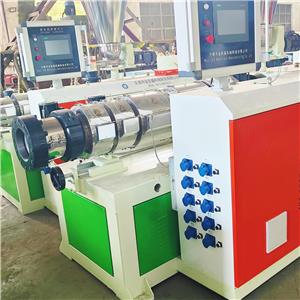
The main components of a PVC extruder machine
A reliable extrusion line is the sum of its parts. Any experienced pvc extruder machine manufacturer will tell you that the quality of these components dictates the machine's lifespan:
Hopper: The entry point for raw materials.
Barrel: A hardened steel cylinder housing the screw, equipped with heating zones.
Screw: The heart of the machine. It conveys, compresses, and mixes the plastic.
Heaters & Thermocouples: These maintain the precise temperature profile along the barrel.
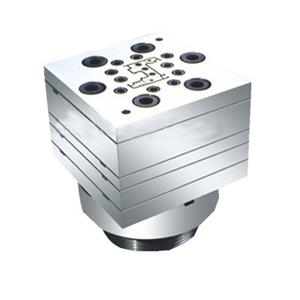
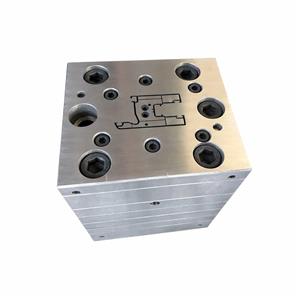
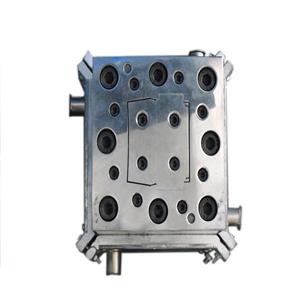
Die: The custom tool that gives the plastic its final shape.
Cooling System: Rapidly stabilizes the hot plastic to prevent deformation.
Puller & Cutter: Keeps the line moving at a constant speed and cuts the product to size.
Control Panel: The brain of the operation, monitoring pressure (melt pressure) and temperature (melt temperature).
Types of PVC products manufactured using extruder machines
The versatility of these machines is vast. By simply changing the die and downstream equipment, manufacturers can switch between products:
Pipes and Conduits: The most common application, critical for plumbing and electrical infrastructure.
Window Profiles: Specialized pvc window extruders are used to create rigid, multi-chambered frames that offer excellent thermal insulation.
Cable Management: To produce high-quality trunking, manufacturers often partner with a specialized pvc cable gutter moulds supplier to ensure smooth internal surfaces and precise locking mechanisms.
Decorative Profiles: This includes baseboards and moldings. Using a high-quality wpc foaming baseboard mold allows for the production of lightweight, wood-like synthetic trim.
Medical Tubing: Requires clean-room standard extrusion for IV bags and catheters.
The importance of PVC extruder machines in the plastic industry
The pvc extruder is indispensable because it bridges the gap between raw chemical potential and practical utility. Its importance lies in:
Scalability: It enables mass production with minimal downtime.
Sustainability: Modern machines can easily process regrind (recycled PVC), reducing industrial waste.
Cost-Efficiency: Lower per-unit costs compared to injection molding for long, continuous shapes.
Advantages and disadvantages of the PVC extrusion process
Pros:
Material Efficiency: Nearly 100% of the raw material is used; scrap can be re-extruded.
High Output: Capable of running 24/7.
Complex Profiles: Can create intricate internal structures (like window frames) in a single pass.
Cons:
Material Limitations: Not all polymers extrude well; PVC requires careful thermal management.
Startup Costs: High initial investment for the machine and tooling.
Fixed Cross-Sections: You cannot change the width or shape of the product along its length (unlike injection molding).
How Does a PVC Extruder Machine Work?
The working principle of a PVC extruder machine
To understand how does extruder work in a practical setting, imagine a giant screw inside a heated pipe. The screw rotates, acting like an Archimedes' screw, pulling material from the hopper. As the plastic moves forward, the channel depth on the screw decreases, compressing the plastic. This compression, combined with the friction of the plastic against the barrel walls (shear heat), causes the PVC to melt. It is a thermodynamic process that converts mechanical energy into heat energy.
Role of temperature and pressure in PVC extrusion
Balancing temperature and pressure is an art form. If the temperature is too low, the pvc machine will struggle to push the material, potentially damaging the screw. If it is too high, PVC (which is heat-sensitive) will degrade and burn, releasing hydrochloric acid gas. Pressure is equally vital; sufficient head pressure ensures the material is compacted and homogenized before entering the die, guaranteeing a product free of voids.
Steps involved in the PVC extrusion process
Feeding: Consistent feed rates are established to prevent surging.
Plasticization: The screw mixes and melts the pellets.
Screening: The melt passes through a breaker plate and screen pack to filter contaminants.
Shaping: The polymer flows through the die profile.
Sizing & Cooling: Vacuum calibration tanks freeze the outer dimensions immediately.
Haul-off: A caterpillar puller draws the profile at a consistent speed.
Common issues and troubleshooting in PVC extrusion machines
Even the best pvc window extruders encounter issues. Troubleshooting is a daily reality:
Die Swell: The plastic expands upon exiting the die. Solution: Adjust die geometry or reduce melt temperature.
Sharkskin (Melt Fracture): Rough surface texture. Solution: Slow down the extrusion speed or increase the die temperature.
Burn Marks: Degradation of PVC. Solution: Check for "dead spots" in the adapter where plastic sits too long or lower the heater band settings.
Wall Thickness Variation: Uneven product. Solution: Check centering of the die or look for surging in the screw speed.
Maintenance tips for PVC extruder machines
To maximize the ROI from your pvc extruder machine manufacturer, follow this maintenance regimen:
Purging: Never let PVC cool inside the barrel. Use a purging compound during shutdown to prevent burning.
Screw & Barrel Inspection: Measure wear periodically. A worn screw reduces output and mixing quality.
Gearbox Lubrication: Change the gear oil regularly to prevent transmission failure.
Heater Band Checks: Ensure all bands are functioning; a single cold zone can disrupt the entire process.
Calibration: Regularly calibrate thermocouples and pressure sensors for accurate readings.